2026 How to Choose the Best Mosquito Sprayer?

Choosing the best mosquito sprayer in 2026 requires more than comparing tank size, pressure, or online ratings. The right equipment must match the treatment area, target pests, formulation, and operator’s experience. A backyard patio needs different control than a farm perimeter or public landscaping project. That distinction matters.

The World Health Organization’s World Malaria Report 2024 estimated 263 million malaria cases and 597,000 deaths worldwide in 2023. Mosquito control is only one part of prevention, but these figures show why reliable application matters. WHO vector-control guidance emphasizes suitable products, correct coverage, monitoring, and resistance management. A powerful sprayer cannot compensate for poor calibration or missed breeding sites.

Regulatory evidence should guide the purchase. In the United States, the Environmental Protection Agency requires pesticide products to carry approved labels. Those labels specify permitted surfaces, dilution rates, protective equipment, and application limits. The CDC also recommends using products according to label directions and choosing methods appropriate for local mosquito risks. Look for adjustable flow, stable pressure, comfortable straps, leak-resistant seals, and replaceable parts. Check whether the nozzle produces the intended spray pattern, from a narrow stream to a controlled fan. A small patio can reveal problems quickly: dripping fittings, uneven wetting, or an empty tank after one pass. No model is perfect. Battery life may disappoint, while a manual pump may require tiring effort. The better decision comes from measured coverage, service support, and safe, label-compliant use—not from the loudest marketing claim.
2026 How to Choose the Best Mosquito Sprayer?

What a Mosquito Sprayer Is and How It Works

A mosquito sprayer is a device that distributes a mosquito-control liquid as fine droplets. Common types include handheld, backpack, and powered mist sprayers. Each uses a tank, pump, hose, and nozzle to control spray volume. The nozzle breaks liquid into droplets, then airflow carries them across foliage, shaded corners, or standing-water edges. Smaller droplets create wider coverage, but wind can move them away from the target. That detail matters.

A sprayer does not simply “kill mosquitoes everywhere.” Most treatments work when droplets contact adult mosquitoes or treated surfaces. Some products affect larvae in water, but only when their labels allow that use. The World Health Organization reported an estimated 263 million malaria cases and 597,000 deaths in 2023 in its World Malaria Report 2024. This figure shows why accurate application matters, especially near homes and public spaces. The U.S. Environmental Protection Agency also explains that pesticide performance depends on application conditions, equipment, and label directions.

In practical yard inspections, coverage often fails under dense leaves, behind furniture, or near blocked drains. A visible mist can look effective. It may not be. Check droplet direction, wind speed, nozzle reach, and untreated hiding places before judging performance. The World Health Organization’s Vector Control Advisory Group emphasizes evidence-based tools and local risk assessment. That makes equipment choice more than a power question. It involves target area, surface type, weather, operator control, and legally approved products. My earlier assumption that stronger spray means better control was incomplete; precision usually matters more than force.

Key Sprayer Types and Their Main Differences

How to Choose the Best Mosquito Sprayer in 2026

Key Sprayer Types and Their Main Differences

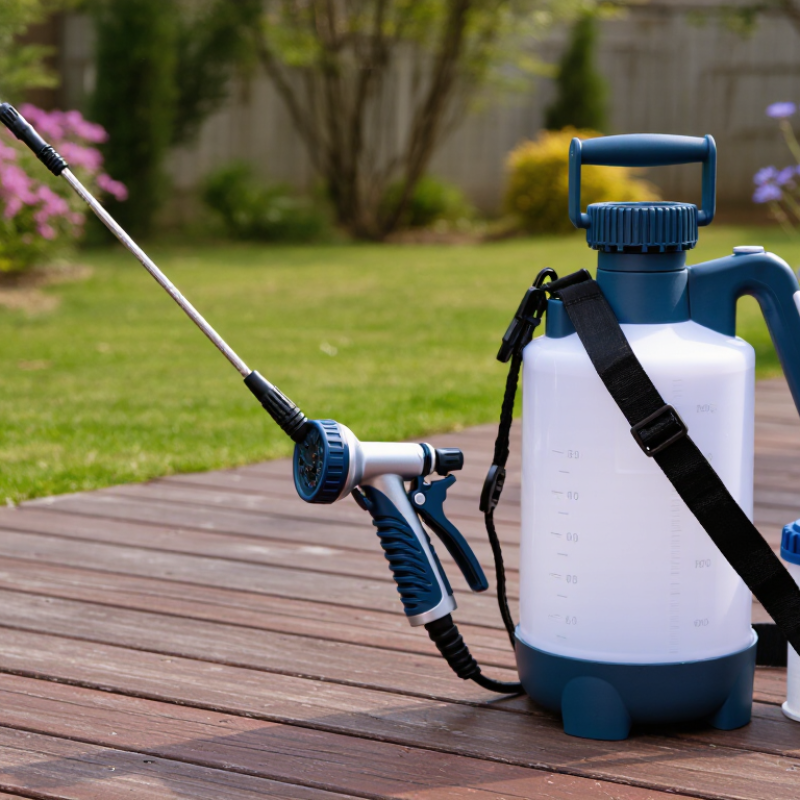
Handheld pump sprayers suit small patios, garden edges, and spot treatment. They are affordable and easy to control. However, frequent pumping can tire your hand, especially across larger yards. Backpack battery sprayers distribute weight better and provide steadier pressure. They cover more ground with less physical effort. Check battery runtime, tank balance, nozzle adjustment, and replacement-part availability before buying.

ULV cold foggers create very fine droplets for broad outdoor coverage. They can reach dense shrubs and narrow spaces, but wind quickly carries mist away. Thermal foggers produce visible fog using heat, so they require extra caution around people, pets, plants, and combustible materials. Local regulations may also restrict certain equipment or treatments. Always follow the product label, required protective equipment, and application limits.

Droplet size matters more than impressive spray distance. Smaller droplets improve coverage but drift more easily. Larger droplets reduce drift but may leave uneven surfaces. A simple water test on a calm day can reveal gaps in coverage. I have found that users often choose powerful machines and ignore calibration. That is a costly mistake. Measure the treated area, record output per minute, and avoid spraying during strong wind or rain. Keep children and animals away until the label permits re-entry. Not perfect, but safer.

How to Match Sprayer Features to Your Yard

2026 How to Choose the Best Mosquito Sprayer?

How to Match Sprayer Features to Your Yard

A good mosquito sprayer should fit your yard, not simply offer the largest tank. The CDC’s 2023 surveillance data recorded 2,911 U.S. West Nile virus cases, including 2,003 neuroinvasive cases. That figure supports careful control, but spraying alone cannot remove every risk.

Measure the treatment area first. A small patio may suit a handheld sprayer with adjustable flow and a narrow nozzle. Larger yards need a comfortable backpack unit, longer reach, and a tank that does not require constant refilling. Dense shrubs need finer coverage, while open lawns may tolerate a wider spray pattern. Watch the wind.

Wind changes everything.

Check battery runtime, shoulder support, and cleaning access. A clogged nozzle can create uneven coverage beside flower beds or under deck steps. I would also inspect the spray drift before treating near ponds, vegetable gardens, children’s play areas, or pets. The U.S. Environmental Protection Agency requires pesticide products to carry directions and precautions on their labels. Follow those instructions exactly, including protective equipment and re-entry guidance. Use only products legally registered where you live.

One easy mistake is choosing power over control. More output may waste liquid and increase drift. Reconsider the purchase after observing standing water, shaded corners, and dense vegetation. Removing containers, clogged gutters, and other breeding sites may reduce the sprayer’s workload. Even experienced users can overlook one bucket behind a shed.

Safety, Environmental, and Application Considerations

2026 How to Choose the Best Mosquito Sprayer?
Safety, Environmental, and Application Considerations

A reliable mosquito sprayer should match the treatment area, target insects, and application method. Start with the product label and local requirements. Never choose equipment by spray volume alone. A powerful machine may create drift, waste, and uncomfortable exposure around people or pets. Look for adjustable flow control, stable pressure, and a nozzle that produces consistent droplets. Protective clothing, eye protection, and clean water for washing equipment are practical safeguards, not optional extras.

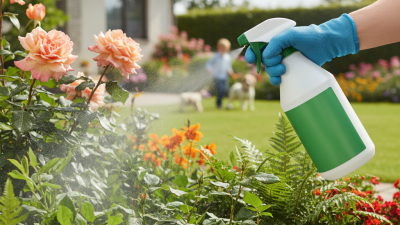
Environmental judgment matters. Avoid spraying near ponds, streams, flowering plants, and active pollinator areas unless the label permits it. Wind can carry fine droplets farther than expected. I prefer checking wind direction, temperature, and nearby drainage before each application. Keep children, pets, and unprotected workers away until the stated re-entry time has passed. Store concentrates securely, and never pour leftovers into soil or drains. Small mistakes can have a wide footprint.

Application quality also depends on timing. Treat shaded resting areas, vegetation edges, and other mosquito harborages instead of covering every surface. Recheck the site after rain, irrigation, or heavy growth. A calibrated sprayer improves consistency and reduces unnecessary chemical use. Still, calibration is not perfect in real conditions. Nozzle wear, uneven terrain, and operator fatigue can change results. I would record weather, settings, treated areas, and observed mosquito activity after each job. That record supports better decisions, although it cannot replace professional training or label instructions.

2026 How to Choose the Best Mosquito Sprayer?

Safety, environmental impact, and application conditions should guide sprayer selection. The chart compares common sprayer types using practical selection criteria on a 1–5 scale, where higher values indicate a stronger advantage for that criterion.

How to read the chart: Backpack mist blowers and vehicle-mounted ULV sprayers generally provide broader coverage, while handheld ULV sprayers use less liquid and are easier to control in small areas. Thermal foggers can create visible fog and may require stricter ventilation, personal-protection, and label-compliance measures. Always follow the pesticide label, weather restrictions, buffer zones, and local regulations.

How to Compare Performance, Cost, and Long-Term Value

Choosing the best mosquito sprayer in 2026 requires more than comparing spray distance. A useful machine should deliver a consistent droplet pattern, stable pressure, and manageable coverage. I test performance on a measured area, not by watching mist drift across a yard. Wind changes everything.

Check the nozzle adjustment, tank seal, battery or engine runtime, and cleaning access. A sprayer that covers 500 square meters quickly may waste treatment if its output is uneven. Look for published flow rates, operating instructions, and testing details from reliable sources. Independent reviews help, but real measurements matter more. Small details count.

Cost should include treatment use, fuel or charging, replacement nozzles, filters, seals, and storage. A cheaper unit can become expensive after repeated repairs. I once chose a low-priced sprayer with impressive pressure, but its hard-to-find seal failed within one season. That was my mistake. A modest warranty and available parts may provide greater long-term value than extra power. Compare the purchase price with expected maintenance over three to five years. Follow the product label, wear suitable protective equipment, and check local application rules before use. Never assume stronger output means better mosquito control.

2026 How to Choose the Best Mosquito Sprayer? - How to Compare Performance, Cost, and Long-Term Value
Sprayer Type Best Use Typical Purchase Cost (USD) Typical Tank Capacity Typical Droplet Size Typical Application Rate Coverage Potential Operating Cost* Maintenance Demand Noise and Emissions Expected Service Life Overall Long-Term Value
Handheld Pump Sprayer Small yards, spot treatment, gardens, and targeted perimeter applications $25–$120 1–3 L 100–400 microns 0.5–1.5 L/min Approximately 250–1,000 m²/hour, depending on operator and nozzle $0.50–$2.00/hour, excluding chemical Low Very low noise; no fuel emissions 2–5 years with regular seal and nozzle replacement ★★★★☆
Best entry-level value
Battery-Powered ULV Fogger Residential mosquito control where low-volume, fine-droplet application is required $250–$900 4–10 L 10–50 microns Approximately 0.02–0.10 L/min Approximately 500–2,000 m²/hour, depending on formulation and weather $1.00–$4.00/hour, including typical battery charging Moderate Low to moderate noise; no direct fuel emissions 3–7 years; battery replacement may be needed after approximately 2–5 years ★★★★★
Strong balance of control and efficiency
Thermal Fogger Large outdoor areas requiring visible, fine fog and rapid knockdown applications $400–$1,500 4–6 L 5–30 microns Approximately 10–60 L/hour Approximately 1,000–4,000 m²/hour, highly dependent on wind and product $2.00–$6.00/hour, including fuel Moderate to high High noise; fuel combustion and exhaust emissions 3–8 years with fuel-system and heating-unit service ★★★☆☆
High output, higher operating burden
Backpack Mist Blower Vegetation, parks, orchards, and areas where air-assisted penetration is important $500–$1,800 10–15 L 50–200 microns Approximately 0.1–2.0 L/min Approximately 2,000–8,000 m²/hour, depending on terrain and foliage $3.00–$8.00/hour, including fuel or battery energy Moderate to high Moderate to high noise; fuel models produce exhaust emissions 4–8 years with engine, fan, hose, and nozzle maintenance ★★★★☆
Best for vegetation and difficult access
Vehicle-Mounted ULV Sprayer Municipal routes, agricultural perimeters, campuses, and very large outdoor sites $5,000–$25,000+ 30–100 L or more 10–50 microns Approximately 0.1–1.0 L/min Approximately 2–10 hectares/hour, depending on vehicle speed and setup $12.00–$35.00/hour, excluding vehicle depreciation and chemical High Vehicle noise; emissions depend on the vehicle and power unit 5–10 years with scheduled professional service ★★★★☆
Economical only at high utilization
How to interpret the figures: The values are typical industry ranges for 2026 purchasing comparisons, not guaranteed specifications for every unit. Actual performance depends on nozzle selection, liquid viscosity, wind speed, humidity, terrain, operator technique, pesticide label requirements, and local regulations. Chemical costs are excluded because they vary significantly by formulation and application rate.
chevron-right