What Are the Best Types of Exercise Equipment in 2026?
In 2026, the best exercise equipment is not necessarily the newest or most expensive. It is the equipment that fits your goals, space, budget, and routine. A folding treadmill may suit a small apartment, while adjustable dumbbells can support varied strength workouts without filling a room. Resistance bands are light and portable. A stationary bike can offer steady cardio with less impact on the joints. Each option has trade-offs.
Dr. Robert Sallis, a family physician and longtime exercise advocate, has championed the idea, “Exercise is Medicine.” That principle matters when comparing Exercose Euipment: useful gear should make consistent, appropriate movement easier, not promise instant results. Look for stable construction, clear adjustment settings, accessible maintenance information, and features you will actually use. A connected screen can be motivating, but it is not essential. Neither is a premium price tag.
This guide explores cardio machines, strength equipment, compact home-gym choices, and practical accessories. It considers comfort, safety, versatility, and value, while recognizing that needs differ. Someone training for endurance may choose differently from someone rebuilding basic strength. There is no perfect shortlist for everyone. Even well-reviewed equipment can become an expensive clothes rack if it does not suit your habits. That possibility deserves honest attention. Use the comparisons as a starting point, and seek qualified guidance if you have health concerns or need exercise modifications.
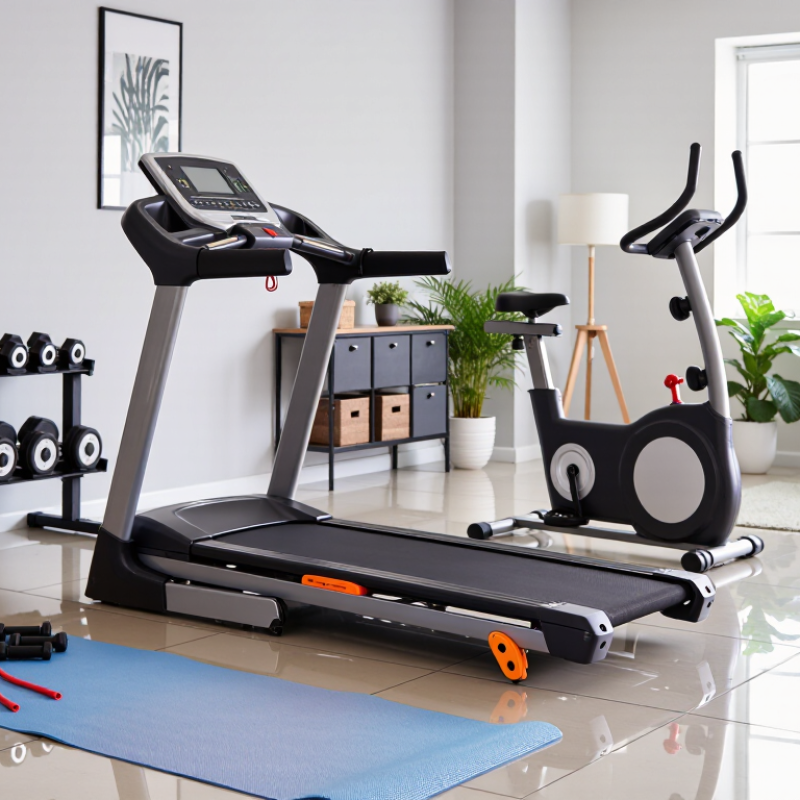
How Exercise Equipment Is Classified in 2026
In 2026, exercise equipment is best classified by the job it helps you do, not by how advanced it looks. Cardio equipment supports sustained movement, from treadmills to stationary cycles. Resistance equipment includes free weights, bands, and machines that load muscles. Functional and mobility tools, such as balance pads and foam rollers, support movement control and range of motion. The categories overlap. A cable station, for example, can train strength and everyday movement patterns.
Digital features form another layer, rather than a separate exercise purpose. The American College of Sports Medicine’s 2025 Worldwide Survey ranked wearable technology first and mobile exercise apps second among fitness trends. That suggests tracking and coaching increasingly shape how people use equipment, though the survey ranks trends, not products. Useful context, not a shopping list. The World Health Organization recommends adults complete 150–300 minutes of moderate aerobic activity weekly and strengthen major muscle groups on at least two days. A practical setup may therefore combine cardio and resistance tools. A mat and bands can be enough for a small room; a screen cannot replace consistent movement. Classification is helpful, but real routines rarely fit neat boxes.
Which Cardio Machines Support Different Training Goals
Cardio machines work best when matched to a specific training goal, not a vague promise to “burn more.” A treadmill suits walking progressions and running intervals; incline raises effort without requiring faster steps. A stationary bike offers low-impact resistance, useful when pounding feels uncomfortable. Choose a recumbent model for back support, though its seated position may feel less demanding than expected.
For longer, steady sessions, an elliptical or rower can involve both upper and lower body. Rowing rewards careful technique; a rounded back can turn a useful workout into an uncomfortable one. The American College of Sports Medicine’s 2023 Worldwide Survey of Fitness Trends ranked high-intensity interval training fifth, a sign that short, harder bouts remain relevant. Yet intervals are not ideal every day. A bike or treadmill can make effort changes easy to control, while the rower adds a steeper learning curve.
Use the machine’s display as a guide, not a verdict. A 2024 U.S. federal physical activity report recommends adults aim for 150–300 minutes of moderate activity weekly, or an equivalent amount of vigorous activity. Start with sessions you can repeat. That matters. Try a comfortable pace, note your breathing, and adjust resistance gradually; calorie estimates vary, and I would not treat them as precise measurements.
What Strength Equipment Builds Power and Muscle
What Are the Best Types of Exercise Equipment in 2026?
What Strength Equipment Builds Power and Muscle
The most useful strength equipment lets you add resistance gradually and repeat movements with good control. A barbell works well for squats, deadlifts, and presses, where you can train several large muscle groups at once. For muscle growth, choose a load you can lift through a steady, comfortable range of motion. Keep it controlled.
Dumbbells allow each side of your body to work independently, which can reveal strength differences and make single-arm or single-leg exercises easier to set up. Cable machines provide resistance throughout much of a movement, making them practical for rows, presses, and accessory work. They’re useful when a barbell feels awkward, though they aren’t essential.
For power, use equipment that supports fast, crisp efforts. Medicine-ball throws, kettlebell swings, and sled pushes can train explosive movement without requiring maximal barbell loads. A trap bar can also suit loaded jumps or faster pulls, but only when technique and training experience make them appropriate. Power work should stop when speed or form noticeably drops. That matters.
In practice, people often choose too much weight too soon. I’ve seen a supposedly powerful set turn into slow, shortened reps. Track the load, repetitions, and how the movement feels, then increase resistance in small steps. A qualified coach can help with technical lifts, especially if you’re new to them.
What Are the Best Types of Exercise Equipment in 2026?
Common repetitions-per-set ranges for strength, muscle growth, and power training
Barbells and dumbbells are versatile choices for progressive strength and power training; machines and cables can make it easier to target muscles with controlled movement. These ranges are common programming guidelines, not strict limits: muscle growth can occur across a wider range of loads when sets are challenging and performed with good technique.
Which Compact Tools Enable Functional and Home Workouts
Compact equipment works best when it supports several useful movement patterns, not just one impressive-looking exercise. Adjustable dumbbells can train squats, rows, presses, and loaded carries while taking up little floor space. Choose a weight range that allows controlled repetitions; heavier is not automatically better. Keep one clear exercise area.
Resistance bands add pulling and pressing options without a bulky frame. A light band can warm up shoulders, while a stronger one can challenge rows or assisted squats. Check bands for cracks, and secure any door anchor on the hinge side. Small details matter. Bands can snap back if poorly attached.
A kettlebell offers a simple way to practise hinges, carries, and squats, but fast swings demand good technique and enough clearance. A suspension trainer can use a sturdy anchor for rows and supported split squats; confirm that the anchor is designed for the load. A mat helps with floor work, though it cannot replace stable footing. One common planning mistake is buying tools before measuring the workout space. I would leave room to step back, turn, and set equipment down safely. Start with a few movements you can perform consistently, then add tools only when a real training gap appears.
How to Choose Equipment for Your Space, Goals, and Budget
Choosing exercise equipment starts with the room you actually have, not the room you wish you had. Measure floor space, ceiling height, and doorways before buying. Measure twice. A folding exercise bike or adjustable dumbbells can suit a small apartment, while a power rack needs more clearance and a stable floor. Leave room to move safely around equipment; a tight fit can make even good gear frustrating to use.
Let your goal guide the choice. For steady cardio, consider a stationary bike, treadmill, or jump rope, depending on noise, impact, and available space. For strength, resistance bands and adjustable weights cover many movements without filling a room. If you are new to training, a few versatile pieces may be more useful than a complex machine. Think about what you will use on an ordinary Tuesday, not only during a burst of motivation.
Set a budget that includes upkeep, mats, and any delivery or assembly costs. Check weight limits, adjustment ranges, stability, and the return policy in the product details. Used equipment can save money, but inspect cables, hinges, and moving parts closely. It is easy to overestimate how much variety you need. I would rather see a simple setup used regularly than a costly machine gathering dust, though preferences differ. Keep enough open floor space for bodyweight exercises and safe equipment access.



 Products
 Search