
What Is the Best Explosion Proof Robot Made in China?

Choosing the best Explosion-Proof Robot made in China requires more than comparing prices or impressive factory videos. The right machine must match the actual hazard, working environment, and inspection requirements. Oil refineries, chemical plants, underground tunnels, and grain facilities may need different protection methods. A robot designed for gas exposure may not suit dusty conditions. That difference matters.

This article examines Chinese explosion-proof robots through practical evidence. We consider enclosure design, certified electrical components, temperature control, battery safety, communication stability, mobility, and payload performance. We also look at test records, factory experience, maintenance support, and documented compliance with recognized standards. A reliable manufacturer should explain its protection rating clearly, provide traceable inspection documents, and demonstrate the robot under realistic conditions. Product photographs are not enough.

Field details reveal important weaknesses. A robot may move smoothly on a clean showroom floor but struggle over wet grating, loose gravel, or narrow access routes. Its camera may provide sharp images, yet fail when dust covers the lens. Battery endurance may also decrease in cold areas or during continuous climbing. These limitations deserve honest attention. No single model is automatically the best for every facility.

The following discussion compares key Chinese manufacturers and product capabilities without treating marketing claims as proven facts. We focus on measurable performance, operator safety, service responsiveness, and long-term value. Some information may require independent verification. That is not a flaw in the evaluation; it is part of responsible purchasing. The strongest choice should be the robot that performs safely, consistently, and transparently in the intended environment.
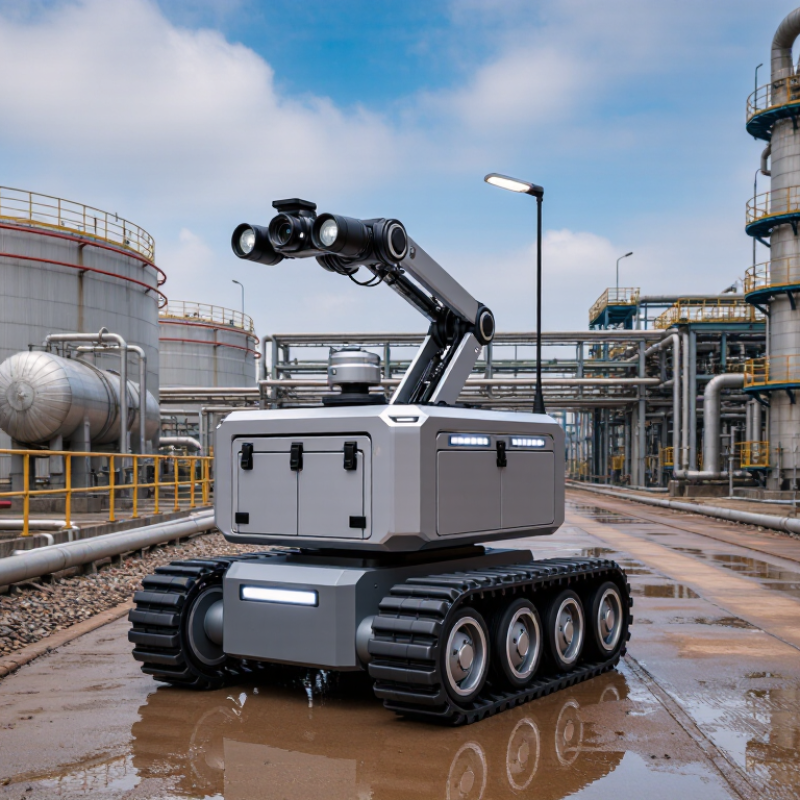
What Is the Best Explosion Proof Robot Made in China?

Explosion-Proof Robot Standards: ATEX, IECEx, and China’s GB/T 3836

Choosing the best explosion-proof robot made in China requires more than checking its origin or price. The real question is certification.

ATEX applies within the European regulatory framework. It classifies equipment for hazardous atmospheres, including gas, vapor, dust, zones, equipment groups, and temperature classes. IECEx provides an internationally recognized certification system based on IEC standards. It can simplify acceptance across several markets, but local requirements may still apply. China’s GB/T 3836 series addresses explosion-proof electrical equipment and aligns closely with international protection concepts. However, similar terminology does not guarantee identical approval conditions.

Look closely at the certificate scope. Does it cover the complete robot, or only the camera, motor, battery, or control box? Check the protection method, Ex marking, ambient temperature range, ingress protection, and cable entries. A robot tested for gas atmospheres may not be suitable for combustible dust. Small details matter. Field experience also shows that maintenance can change compliance. Replacing a sealed connector with a standard part may invalidate the protection concept. This is easy to miss.

A reliable supplier should provide test reports, drawings, manuals, component certificates, and traceable production records. Ask how charging is controlled in hazardous areas. Ask how heat is monitored during continuous operation. I would not select equipment from a certificate title alone. The safer choice is a robot whose certification matches the actual site classification, operating temperature, payload, and inspection routine. Some documents look complete, yet leave practical questions unanswered. That deserves careful review.

Key Performance Metrics: Payload, IP Rating, Runtime, and 360° Mobility

What Is the Best Explosion Proof Robot Made in China?

The best explosion-proof robot should match the worksite, not merely display impressive numbers. Payload is a practical starting point. Measure the camera, sensors, lights, cable, and tools together. A robot rated for 30 kilograms may perform poorly when its arm reaches full extension. Ask for payload charts at different angles. Small details matter.

The IP rating shows protection against dust and water. An IP66 enclosure can resist dust and powerful water jets, but it does not prove explosion-proof suitability. Request valid certification for the intended hazardous area and operating conditions. Certification must come from an authorized testing body. This is where a brochure can be incomplete. Do not treat IP protection as a substitute for safety compliance.

Runtime should reflect real operation. Motors, lighting, wireless communication, slopes, and repeated stops consume energy. A claimed eight-hour runtime may fall sharply during continuous inspection. Request test results with the complete sensor package installed. Keep a practical reserve, especially in remote sites. Cold temperatures can reduce battery performance.

360° mobility also needs careful testing. Can the robot turn within a narrow corridor? Can it move sideways, rotate in place, and cross a small threshold? A rotating body does not guarantee full visual coverage. Check camera blind spots and emergency stopping distance. I would choose verified field data over the highest specification. Performance claims sometimes look cleaner than reality.

What Is the Best Explosion-Proof Robot Made in China?

Key performance metrics include payload, ingress protection, operating runtime, and horizontal mobility. The charts below show representative specification ranges for generic explosion-proof robot system classes, without using company or brand data.

These are generalized industry specification ranges for explosion-proof inspection and handling robots. Actual performance depends on certification class, battery configuration, terrain, payload position, operating temperature, and mission conditions. Always verify the final IP and hazardous-area certification before deployment.

Chinese Explosion-Proof Robot Types for Oil, Gas, Chemical, and Mining Sites

What Is the Best Explosion-Proof Robot Made in China?

The best Chinese explosion-proof robot depends on the site, not the sales brochure. Oil and gas facilities usually need tracked or wheeled inspection robots with thermal cameras, gas sensors, loudspeakers, and remote video links. A low-profile tracked model handles gravel, pipe racks, and narrow service routes. Wheeled robots move faster across smooth floors. For chemical plants, operators should prioritize corrosion-resistant housings, accurate gas detection, and IEC 60079 or GB/T 3836 certification.

Mining sites require different designs. Tracked robots can cross loose rock and steep ramps, while Quadruped Robots can inspect stairs, conveyors, and uneven tunnels. Some Chinese systems combine methane, carbon monoxide, oxygen, and temperature sensors. This matters underground. The International Labour Organization reports that mining employs about 1% of the global workforce but causes roughly 8% of fatal occupational accidents. Remote inspection can reduce exposure, but it cannot replace ventilation, rescue planning, or trained crews.

Oil and gas monitoring also has a strong environmental reason. The International Energy Agency’s Global Methane Tracker 2024 estimated around 120 million tonnes of methane emissions from fossil-fuel operations in 2023. A robot that detects leaks early can support maintenance records and targeted repairs. In practice, radio performance often disappoints behind steel tanks and concrete walls. Battery life also falls in cold tunnels. The “best” model should therefore pass a real site trial, not only a laboratory test. Certification scope, sensor calibration, emergency shutdown behavior, and service support deserve equal attention. Some choices remain imperfect. That is exactly why testing matters.

What Is the Best Explosion Proof Robot Made in China? - Chinese Explosion-Proof Robot Types for Oil, Gas, Chemical, and Mining Sites

Robot Type Best-Fit Site Typical Hazardous Area Mobility and Access Typical Payload Typical Runtime Typical Protection Features Main Inspection Functions Best Choice When
Tracked Inspection Robot Oil refineries, gas processing plants, chemical plants, tank farms Zone 1 or Zone 2, subject to the certified configuration Strong traction on concrete, grating, uneven floors, and moderate slopes Approximately 10–50 kg, depending on chassis and payload module Approximately 2–8 hours under normal inspection loads Sealed electrical enclosure, intrinsically safe circuits or certified flameproof enclosure, static-control measures Visible-light and thermal imaging, gas detection, acoustic leak detection, pressure-gauge reading The site requires a balanced platform for routine patrols and uneven industrial terrain
Wheeled Explosion-Proof Patrol Robot Indoor process areas, compressor stations, pumping stations, warehouses Zone 2 applications and other areas approved by the relevant certification Fast movement on smooth floors; less suitable for loose gravel, deep mud, and steps Approximately 5–30 kg Approximately 4–10 hours, depending on speed and sensor load Low-spark drive design, protected battery compartment, sealed connectors, emergency stop system Routine visual inspection, thermal screening, gas concentration measurement, video recording Long patrol distance and low operating cost are more important than obstacle climbing
Quadruped Explosion-Proof Robot Complex process units, pipe racks, construction areas, outdoor energy facilities Potentially Zone 1 or Zone 2 only when the complete system is certified for that zone Negotiates steps, thresholds, grating, slopes, and irregular ground better than most wheeled platforms Usually approximately 5–20 kg Approximately 1.5–4 hours in continuous inspection operation Certified power and control modules, protected joints, controlled surface temperature, grounding and static management Thermal inspection, valve and instrument reading, gas sensing, 3D mapping, remote visual checks Access to difficult terrain is the main requirement and shorter endurance is acceptable
Explosion-Proof Robotic Arm Platform Sampling points, valve stations, loading areas, chemical process units Zone 1 or Zone 2, according to the complete robot and end-effector certification Mobile base with a manipulator for reaching controls and equipment Arm payload commonly approximately 2–15 kg Approximately 2–6 hours, depending on manipulation frequency Explosion-protected actuators or barriers, protected tool interfaces, torque limitation, emergency shutdown Valve operation, switch manipulation, sample handling, gauge reading, close-range inspection The robot must physically operate controls rather than only collect inspection data
Explosion-Proof Crawler for Tanks and Pipelines Storage tanks, pipelines, pressure vessels, and confined metallic surfaces Use only with a protection concept and certification suitable for the specified hazardous atmosphere Magnetic or vacuum adhesion on compatible steel surfaces; restricted by coating, curvature, and surface condition Usually approximately 2–15 kg Approximately 1–5 hours Sealed drive system, controlled electrical energy, tether monitoring, fall-arrest or retention system Coating inspection, corrosion imaging, weld inspection, thickness measurement, thermal checks Inspection must be performed on vertical or curved metal surfaces without scaffolding
Explosion-Proof Mine Inspection Robot Coal mines, underground roadways, mining transfer stations, and hazardous tunnels Mine-specific hazardous locations; approval requirements differ from surface industrial zones Tracked drive for loose ground, inclines, water splash, dust, and confined passages Approximately 10–40 kg Approximately 2–8 hours Dust and water protection, methane and carbon-monoxide monitoring, approved battery and radio systems Methane detection, ventilation assessment, thermal monitoring, mapping, video inspection The operating environment contains combustible dust, methane, water, and limited communications
Explosion-Proof Unmanned Ground Vehicle Large refineries, petrochemical complexes, terminals, and remote outdoor assets Zone 2 or other designated areas, provided the full vehicle configuration is certified Long-range outdoor travel with autonomous navigation, remote control, or supervised autonomy Approximately 20–100 kg, depending on vehicle size and mission equipment Approximately 4–12 hours Protected powertrain, redundant braking, geofencing, remote emergency stop, certified sensor and communication modules Perimeter patrol, gas mapping, thermal surveillance, intrusion detection, equipment inspection The facility needs repeatable patrol routes over a large area with reduced personnel exposure
Selection note: The best explosion-proof robot is determined by the hazardous-area classification, gas or dust group, temperature class, ingress-protection requirement, terrain, payload, communication method, and required certification. Values shown are typical engineering ranges rather than guaranteed specifications; the complete robot system must be verified against the applicable local approval requirements before deployment.

Safety Evaluation Using Gas Groups, Temperature Classes, and Zone Ratings

What Is the Best Explosion Proof Robot Made in China?

Safety Evaluation Using Gas Groups, Temperature Classes, and Zone Ratings

The best explosion proof robot is not chosen by appearance or country of manufacture. It is selected through verifiable safety evidence. A practical evaluation starts with the intended atmosphere, operating temperature, payload, and cleaning method. The robot’s certificate should identify its protection concept, approved ambient range, and testing authority.

Gas groups reveal the challenge. Group IIA covers less demanding gases, while IIB and IIC require stronger protection. Hydrogen and acetylene environments usually demand IIC-level suitability.

Zone ratings matter equally. Zone 0 requires equipment designed for continuous or frequent gas exposure. Zone 1 involves occasional exposure, while Zone 2 concerns abnormal or short-term conditions. Dust zones use different classifications, including Zones 20, 21, and 22.

Temperature classes prevent a hidden ignition risk.

T1 permits a higher maximum surface temperature than T6. A robot rated T4 may still be unsuitable where T5 or T6 protection is required. Check motors, batteries, connectors, cameras, and charging points separately. One overlooked hot surface can weaken the whole assessment.

A neat certificate is not enough.

I would request enclosure test records, routine inspection procedures, and maintenance limits. Field trials should include braking, wireless communication, battery heating, and sensor windows covered with dust. In my view, many comparisons stop too early at the certificate label. That is a mistake worth admitting. Real reliability also depends on trained operators, controlled repairs, and whether the robot remains compliant after repeated impacts. Manufacturer documentation must match the exact model and configuration, not merely a similar product family.

How to Compare Chinese Manufacturers by Certification, Testing, and Support

Choosing the best explosion-proof robot made in China requires more than checking a certificate logo. Certification must match the operating environment, including gas or dust group, temperature class, equipment protection level, and hazardous-area zone. Confirm whether the certificate covers the complete robot, not only its camera, motor, or control box. IECEx and ATEX documents can support international projects, while Chinese projects may require applicable national certification. Paperwork is not proof.

Testing quality separates serious manufacturers from capable assemblers. Request reports for flameproof joints, surface temperature, ingress protection, battery safety, electromagnetic compatibility, and continuous operation. The testing laboratory should be independent and traceable. The International Federation of Robotics reported 541,302 industrial robots were installed globally in 2023, with China accounting for 276,288 installations. This scale shows strong manufacturing capacity, but it does not automatically prove hazardous-area expertise. Test the whole machine.

Support is equally important underground, inside tanks, or near processing equipment. Ask for commissioning records, maintenance intervals, spare-part availability, software update control, and emergency response times. A reliable supplier should provide drawings, certificate numbers, inspection limits, and operator training. The International Energy Agency’s Global Hydrogen Review 2024 also highlights expanding hydrogen infrastructure, where ignition control and equipment qualification remain critical. Experience still matters. One weakness remains: some suppliers present laboratory data without explaining field limitations. Buyers should challenge those gaps, inspect a working reference site, and compare support performance over twelve months, not only purchase price.

chevron-right